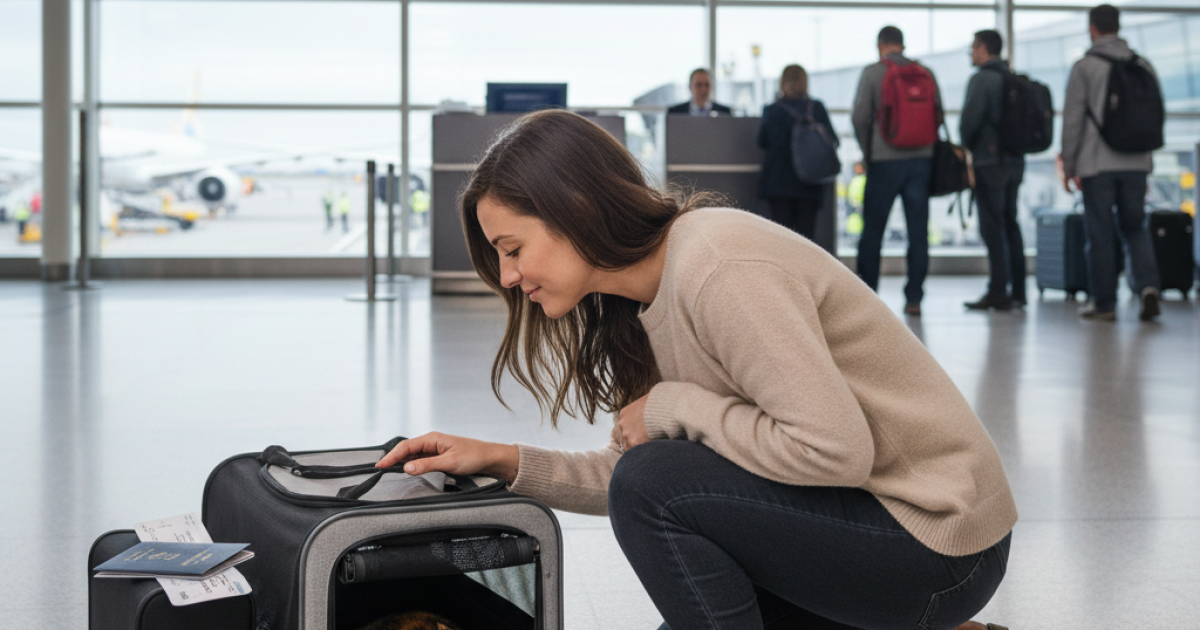
Embarking on an international journey with your beloved feline companion can feel daunting, but with the right preparation, it's an achievable and rewarding experience. This comprehensive guide from CatAbroad.com is designed to demystify the process, providing first-time international cat travellers with all the essential information, practical tips, and reassurance needed for a smooth journey from the UK to your new destination.
CABIN VS. CARGO: WHERE WILL YOUR CAT FLY?
One of the first and most crucial decisions you'll face when planning international air travel for your cat is whether they will fly in the aircraft cabin with you or in the temperature-controlled cargo hold. Each option has distinct rules, benefits, and considerations.
Flying in the Cabin (Pet in Cabin - PIC):
This is often the preferred option for many cat owners due to the ability to keep your pet close and monitor them throughout the flight. However, it comes with significant restrictions:
- Size and Weight Limits: Most airlines have strict limits on the combined weight of your cat and their carrier, typically around 8-10 kg (17-22 lbs). Your cat must also be small enough to stand up, turn around, and lie down comfortably in a carrier that fits under the seat in front of you.
- Carrier Requirements: Carriers for cabin travel are usually soft-sided, flexible, and must meet specific dimensions set by the airline. They must be leak-proof and well-ventilated.
- Breed Restrictions: Some airlines may have breed restrictions even for cabin travel, though this is less common for cats than for dogs.
- Number of Pets: Airlines usually limit the number of pets allowed in the cabin per flight, so early booking is essential.
- Route Restrictions: Certain routes or destinations may not permit pets in the cabin due to local regulations or aircraft type.
Flying in the Cargo Hold (Manifest Cargo or Excess Baggage):
For larger cats, multiple cats, or when cabin restrictions apply, the cargo hold is the only option. While it might sound intimidating, modern cargo holds for live animals are pressurised, temperature-controlled, and designed for animal safety.
- IATA-Compliant Crates: This is non-negotiable. Your cat must travel in a rigid, IATA-compliant pet crate (more on this below).
- Temperature Restrictions: Airlines often have temperature restrictions at both departure and arrival airports. If temperatures are too hot or too cold, your cat's flight may be delayed or re-routed for their safety. This is particularly relevant during summer and winter months.
- Sedation: Most airlines and veterinarians strongly advise against sedating pets for cargo travel due to potential respiratory and cardiovascular problems at altitude.
- Breed Restrictions: Brachycephalic (snub-nosed) breeds like Persians and Himalayans are often restricted or banned from cargo travel due to their increased risk of respiratory distress.
- Booking as Cargo: This is typically handled by an airline's cargo division or a specialist pet relocation company, not through standard passenger booking.
Pro Tip
Always check with your chosen airline directly for their specific pet policy, as rules can vary significantly and change frequently. Do not rely solely on third-party websites.
Cabin vs. Cargo at a Glance
| Feature | Cabin Travel | Cargo Travel |
| Pet Size/Weight | Small cats, under ~10kg with carrier | Larger cats, multiple cats, or when cabin not allowed |
| Carrier Type | Soft-sided, flexible, fits under seat | Rigid, IATA-compliant crate |
| Owner Proximity | With owner in cabin | Separate from owner in cargo hold |
| Sedation | Generally not recommended | Strongly advised against |
| Cost | Typically lower, fixed fee | Significantly higher, based on weight/volume |
| Booking | Direct with passenger booking | Via cargo division or pet relocation company |
CHOOSING THE RIGHT AIRLINE FOR YOUR CAT'S INTERNATIONAL FLIGHT

Not all airlines are created equal when it comes to pet travel. Researching and selecting a pet-friendly airline is paramount for a stress-free journey. Here's what to look for:
Dedicated Pet Policies:
A good airline will have a clear, detailed, and easily accessible pet policy on their website. Look for information covering:
- Allowed species and breeds.
- Cabin vs. cargo options and specific restrictions for each.
- Carrier/crate dimensions and requirements.
- Health documentation needed.
- Booking procedures and contact information for their pet travel department.
- Temperature embargoes or seasonal restrictions.
Reputation and Experience:
Some airlines have a stronger reputation for handling live animals. Look for airlines that:
- Are members of IPATA (International Pet and Animal Transportation Association) if you're using a pet relocation service.
- Have dedicated animal handling facilities at their hub airports.
- Receive positive reviews from other pet owners regarding their pet travel experience. Online forums and expat groups can be a great resource for this.
Direct Flights vs. Layover:
Whenever possible, opt for direct flights. Layovers increase stress for your cat, involve additional handling, and introduce risks of missed connections or delays. If a layover is unavoidable, ensure it's long enough for your cat to be checked on and transferred safely, but not excessively long.
Warning
Avoid airlines known for frequent delays or poor customer service, as these issues can be exacerbated when travelling with a pet.
Cost Considerations:
Pet travel fees can vary wildly. Cabin fees are usually a flat rate, while cargo fees are calculated based on the crate's volumetric weight. Get clear quotes from several airlines or pet relocation companies. Remember, the cheapest option isn't always the best when your pet's safety and comfort are at stake.
Good to Know
Some airlines (e.g., British Airways, Virgin Atlantic) only transport pets as cargo through their dedicated cargo divisions or approved pet shippers, not as excess baggage with passengers.
📋 Airline Selection Checklist
- ☐Checked airline's specific pet policy for your destination.
- ☐Confirmed cabin vs. cargo eligibility for your cat.
- ☐Researched airline's reputation for pet handling.
- ☐Prioritised direct flights where possible.
- ☐Obtained clear quotes for pet travel fees.
IATA-COMPLIANT CRATE REQUIREMENTS FOR SAFE CAT TRAVEL
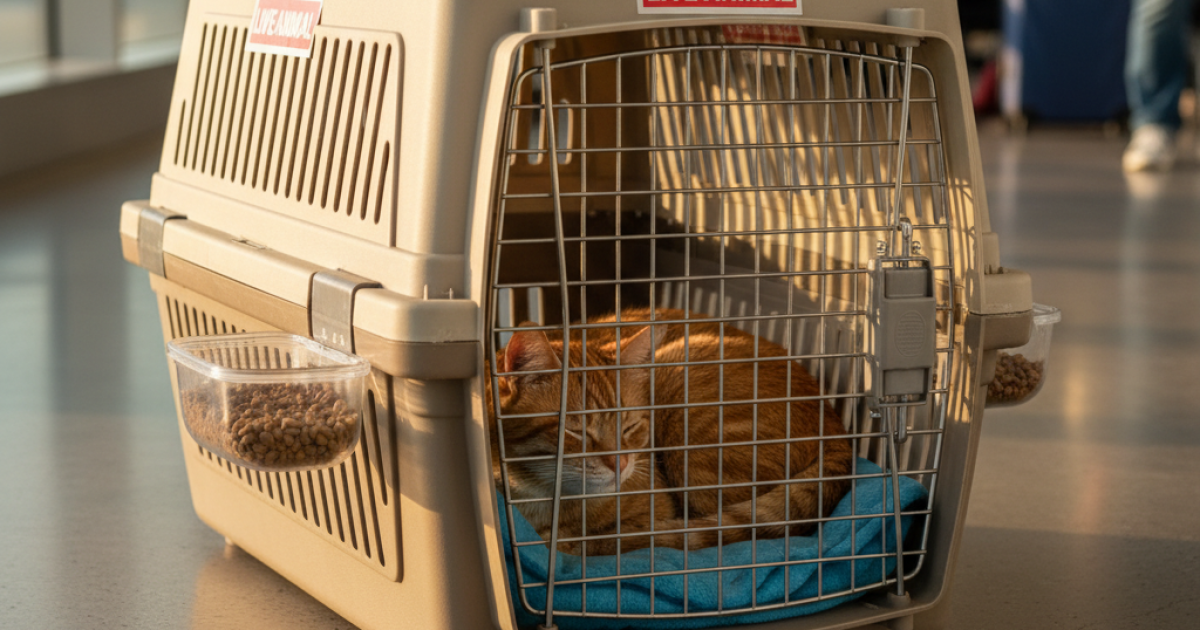
If your cat is travelling in the cargo hold, an IATA (International Air Transport Association) compliant travel crate is not just a recommendation – it's a mandatory safety standard. These regulations are designed to ensure your pet's comfort, safety, and security during air travel.
Key IATA Crate Specifications:
- Material: The crate must be made of rigid plastic, wood, or metal. Wire mesh crates are generally not permitted.
- Size: This is critical. Your cat must be able to stand up without their head touching the top of the crate, turn around normally, and lie down in a natural position. Measure your cat carefully:
- Length: From nose to base of tail + half the height from ground to elbow joint.
- Height: From ground to top of head or tip of ears (whichever is higher) when standing.
- Width: Twice the width of your cat's broadest point.
- Ventilation: There must be ventilation on at least three sides for domestic flights and four sides for international flights. The openings must be large enough to prevent suffocation but small enough to prevent escape.
- Door: The door must be made of strong metal mesh, securely fastened, and escape-proof. It should have a spring-loaded or secure latch that cannot be opened accidentally.
- Food and Water Bowls: Two empty food and water bowls must be securely attached to the inside of the door, accessible from the outside without opening the door. This allows airline staff to provide refreshment if needed.
- Leak-Proof Floor: The bottom of the crate must be solid and leak-proof, with absorbent bedding (e.g., a 'vet bed' or shredded paper) to absorb any accidents. Straw or hay is usually prohibited.
- Labelling: The crate must be clearly labelled with 'LIVE ANIMAL' stickers (at least 1 inch high), your name, contact information, destination address, and your cat's name. Up arrows indicating the upright position are also required.
- Wheels: If the crate has wheels, they must be removed or rendered inoperable for the flight.
Pro Tip
Start crate training well in advance! Introduce the crate as a safe, positive space with treats, toys, and comfortable bedding. The more comfortable your cat is with their crate, the less stressful the journey will be.
Acclimatisation is Key:
Purchase the crate several weeks or even months before your flight. Leave it open in a quiet area of your home, allowing your cat to explore it at their own pace. Feed them inside the crate, put favourite toys in it, and make it a cosy den. This positive association is invaluable.
📋 IATA Crate Checklist
- ☐Rigid plastic, wood, or metal construction.
- ☐Correct size for your cat (stand, turn, lie down).
- ☐Ventilation on all four sides.
- ☐Secure, escape-proof metal mesh door.
- ☐Two empty food/water bowls accessible from outside.
- ☐Leak-proof bottom with absorbent bedding.
- ☐'LIVE ANIMAL' stickers and identification labels.
- ☐Wheels removed or locked.
- ☐Cat is acclimatised and comfortable in the crate.
HOW TO KEEP YOUR CAT CALM AND COMFORTABLE DURING A FLIGHT
A calm cat makes for a less stressful journey for everyone. While you can't eliminate all anxiety, several strategies can significantly reduce your cat's stress levels.
Pre-Flight Preparation:
- Crate Acclimatisation: As mentioned, this is the single most important step. A familiar, safe-feeling crate is half the battle won.
- Familiar Scents: Place a blanket or an old t-shirt with your scent, or the scent of their home, inside the carrier. This provides comfort and familiarity.
- Pheromone Sprays: Feliway Classic spray (containing synthetic feline facial pheromones) can help create a calming environment. Spray the carrier 15-30 minutes before placing your cat inside. Never spray directly on your cat.
- Avoid Sedation (Generally): Most vets and airlines advise against sedatives, especially for cargo travel, due to potential respiratory and cardiovascular issues at altitude. Discuss any concerns with your vet, who might suggest mild, non-sedative anti-anxiety medications or natural calming supplements if appropriate for your cat's health.
- Exercise Before Travel: A good play session before leaving for the airport can help tire your cat out, making them more likely to rest during the journey.
- Limit Food/Water: On the day of travel, limit food intake to a small, light meal about 4-6 hours before the flight to minimise the risk of motion sickness. Provide water up until departure, but remove the bowl just before checking in to prevent spills.
During the Flight (Cabin Travel):
- Quiet Environment: Keep your cat's carrier covered with a light blanket to create a dark, den-like space, reducing visual stimulation.
- Reassurance: Speak to your cat in a calm, soothing voice. If permitted by the airline, you might be able to gently reach in and offer a comforting stroke.
- Avoid Opening the Carrier: Do not open the carrier during the flight, even if your cat seems distressed. An escape in a confined aircraft can be disastrous.
Warning
Never give your cat any medication, herbal remedy, or sedative without explicit veterinary approval. What seems harmless can be dangerous at altitude.
During the Flight (Cargo Travel):
While you won't be with your cat, the pre-flight preparation is even more critical:
- Comfortable Bedding: Ensure the crate has soft, absorbent bedding that smells familiar.
- Water Bottle: A drip-feed water bottle attached to the inside of the crate door can provide continuous access to water without spills. Ensure your cat is accustomed to using it.
- 'Do Not Sedate' Label: Clearly label the crate with 'DO NOT SEDATE' if your vet has advised against it.
Good to Know
Some cats respond well to calming music or audiobooks played softly on a small, battery-operated device placed near the carrier (if allowed by the airline and not disturbing other passengers).
WHAT TO EXPECT AT THE AIRPORT WITH YOUR CAT
Navigating the airport with a pet requires extra time and patience. Knowing the process in advance can ease your stress.
Arrival at the Airport:
- Early Arrival: Plan to arrive at the airport significantly earlier than usual – typically 3-4 hours before an international flight, especially if your cat is travelling as cargo.
- Check-in:
- Cabin Pets: You'll usually check in at the regular passenger counter. The airline staff will verify your cat's carrier size, weight, and documentation. You'll pay the pet fee at this point.
- Cargo Pets: You'll proceed to the airline's cargo terminal, which is often separate from the passenger terminal. Here, dedicated cargo staff will inspect the crate, documentation, and your cat before accepting them.
- Security Check (Cabin Pets Only): You will need to remove your cat from their carrier and carry them through the metal detector while the empty carrier goes through the X-ray machine. This can be a stressful moment, so ensure your cat is securely held or harnessed. Some airports may have private screening rooms – ask if available.
Ensure your cat is wearing a secure harness and lead during the security check. A frightened cat can easily slip out of a collar.
During Layover (if applicable):
- Cabin Pets: You'll keep your cat with you. Try to find a quiet area for a brief comfort break (if your cat is leash-trained and permitted) or to offer water.
- Cargo Pets: Airline staff will typically check on cargo pets during layovers, offering water and ensuring their well-being. However, owner access is usually not permitted.
Arrival at Destination:
- Customs and Immigration:
- Cabin Pets: You'll proceed through customs with your cat. Be prepared to present all health certificates and import permits to the border control officer. They may inspect your cat.
- Cargo Pets: Your cat will be processed through the animal reception centre at the destination airport. This can take several hours. You will need to present all original documentation, pay any import duties or fees, and clear customs before your cat is released to you.
- Post-Arrival Check: Once reunited, immediately check your cat for any signs of distress, injury, or illness. Offer water and a small amount of food.
Pro Tip
Have all your pet's documentation easily accessible in a dedicated folder. Keep both original copies and digital backups on your phone and cloud storage.
HEALTH CERTIFICATES AND ESSENTIAL DOCUMENTATION FOR INTERNATIONAL CAT TRAVEL
This is arguably the most complex and critical part of international pet travel. Requirements vary significantly by destination country and can change without much notice. Start this process early – ideally 6-12 months before your planned travel date.
Key Documents You'll Likely Need:
- Microchip: Your cat must be microchipped with an ISO-compliant 15-digit microchip before any vaccinations or treatments are administered. This is the primary form of identification.
- Rabies Vaccination: A valid rabies vaccination is almost universally required for international travel. It must be administered after the microchip. Your cat must be at least 12 weeks old for the primary vaccination.
- Rabies Titre Test (RNATT): Many countries (e.g., Australia, New Zealand, Japan, some Middle Eastern countries) require a blood test to confirm the rabies vaccination was effective. This test must be performed at an approved laboratory, typically 30 days after vaccination, and there's often a waiting period (e.g., 3 months) after a successful test before your cat can enter the country.
- Other Vaccinations: Ensure your cat is up-to-date on all routine vaccinations (e.g., feline distemper, calicivirus, herpesvirus) as recommended by your vet.
- Internal and External Parasite Treatment: Many countries require specific treatments for tapeworms and ticks within a certain timeframe before travel.
- Official Health Certificate: This is a government-issued document, signed and stamped by an Official Veterinarian (OV) in the UK, confirming your cat meets all health requirements for entry into the destination country. The specific certificate form varies by destination (e.g., APHA export health certificate for many countries, EU Animal Health Certificate for EU travel). This certificate usually has a very limited validity period (e.g., 10 days from issue to entry).
- Import Permit: Some countries require you to obtain an import permit from their government's animal health authority before your cat can enter. This can be a lengthy process.
- Pet Passport (for EU travel pre-Brexit, now largely replaced): For travel from the UK to the EU, the UK Pet Passport is no longer valid. You now need an EU Animal Health Certificate (AHC) issued by an Official Veterinarian.
Good to Know
The UK government's website (GOV.UK) is the definitive source for current pet travel rules from the UK. Always check the specific requirements for your destination country.
Working with Your Vet:
Find a vet in the UK who is an Official Veterinarian (OV) or works closely with one. They will be crucial in navigating the complex paperwork and ensuring all treatments are administered correctly and on time. Schedule an initial consultation as soon as you know you're moving.
📋 Documentation Checklist (General)
- ☐ISO-compliant microchip certificate.
- ☐Rabies vaccination certificate (post-microchip).
- ☐Rabies Titre Test results (if required).
- ☐Proof of other routine vaccinations.
- ☐Official Health Certificate (e.g., APHA Export Health Certificate or EU AHC).
- ☐Import Permit from destination country (if required).
- ☐Your passport and travel documents.
TIPS FOR LONG-HAUL INTERNATIONAL CAT JOURNEYS
Long-haul flights add an extra layer of complexity and stress. Here are specific considerations for extended journeys:
Consider a Pet Relocation Service:
For very long or complex journeys, especially those involving multiple legs, quarantine, or specific import requirements, a professional pet relocation company can be invaluable. They handle all the logistics, documentation, airline bookings, and customs clearance, significantly reducing your burden. While costly, the peace of mind can be worth it.
Hydration and Feeding:
- Cargo: Ensure the crate has a reliable drip-feed water bottle. Attach a small bag of dry food to the top of the crate with feeding instructions for airline staff.
- Cabin: Offer small amounts of water during the flight using a collapsible bowl or a syringe (without the needle). If the flight is very long, a tiny amount of wet food might be offered if your cat is calm and the airline permits, but avoid overfeeding.
Pro Tip
If using a pet relocation service, choose one that is IPATA-certified. This ensures they adhere to the highest standards of animal welfare and industry best practices.
Post-Arrival Care:
- Quarantine: Be prepared for potential quarantine periods in some countries (e.g., Australia, New Zealand). Understand the duration and conditions well in advance.
- Settling In: Upon arrival at your new home, create a quiet, secure 'base camp' for your cat. Provide their familiar food, water, litter tray, and bedding. Give them time to decompress and explore their new surroundings at their own pace.
- Vet Check-up: Schedule a vet check-up within a few days of arrival to ensure your cat is healthy and to discuss any local health concerns or vaccination requirements.
Your Own Well-being:
Remember that your stress can transfer to your cat. Try to remain calm and positive throughout the process. Being well-prepared is the best way to achieve this.
Good to Know
Consider booking a direct flight, even if it's slightly more expensive, to minimise stress and handling for your cat on long-haul journeys.
Flying with your cat internationally is a significant undertaking, but with meticulous planning, adherence to regulations, and a focus on your cat's comfort, it's a journey you can successfully navigate. Trust in the process, lean on professional advice, and look forward to starting your new adventure with your beloved feline by your side.
Frequently Asked Questions
Can I fly with my cat in the cabin internationally from the UK?
Yes, some airlines allow small cats to fly in the cabin internationally, provided they meet strict weight and carrier size requirements. However, policies vary greatly by airline and destination, so always check directly with your chosen carrier.
What is an IATA-compliant pet crate and why is it important?
An IATA-compliant pet crate meets specific international standards for material, size, ventilation, and security, ensuring your cat's safety and comfort when travelling in the cargo hold. It's a mandatory requirement for cargo pet travel.
Do I need a rabies titre test for my cat to travel from the UK?
A rabies titre test (RNATT) is required for entry into many countries, particularly those with strict rabies-free status like Australia, New Zealand, and Japan. It confirms your cat's rabies vaccination was effective and often involves a waiting period before travel.
Is it safe for my cat to fly in cargo on a long-haul flight?
Modern aircraft cargo holds for live animals are pressurised and temperature-controlled, making it generally safe. However, choosing a reputable airline, using an IATA-compliant crate, and avoiding sedation are crucial for minimising risks on long-haul journeys.
How far in advance should I start planning international cat travel?
You should start planning at least 6-12 months in advance, especially for destinations with complex import requirements like rabies titre tests and quarantine. This allows ample time for vaccinations, waiting periods, and documentation.
Can I sedate my cat for an international flight?
Most veterinarians and airlines strongly advise against sedating pets for air travel, particularly for cargo, due to the potential for respiratory and cardiovascular problems at altitude. Always consult your vet for safe calming alternatives.
What documents do I need for my cat to fly from the UK to the EU?
Since Brexit, UK Pet Passports are no longer valid for EU travel. You will need an ISO-compliant microchip, a valid rabies vaccination, and an EU Animal Health Certificate (AHC) issued by an Official Veterinarian within 10 days of travel.
Should I use a pet relocation company for my cat's international move?
For complex, long-haul, or multi-country moves, a professional IPATA-certified pet relocation company can be highly beneficial. They manage logistics, documentation, and airline bookings, providing peace of mind, though at a significant cost.